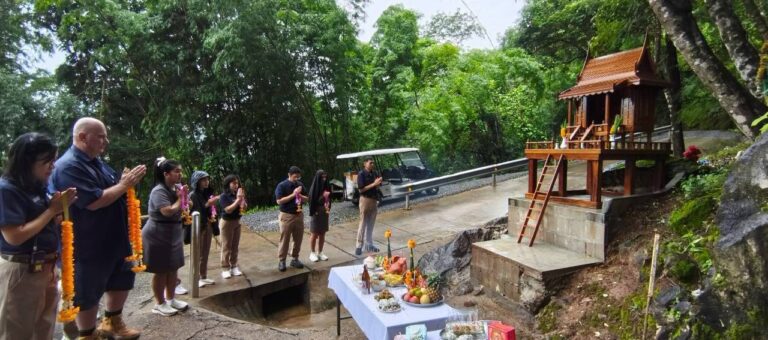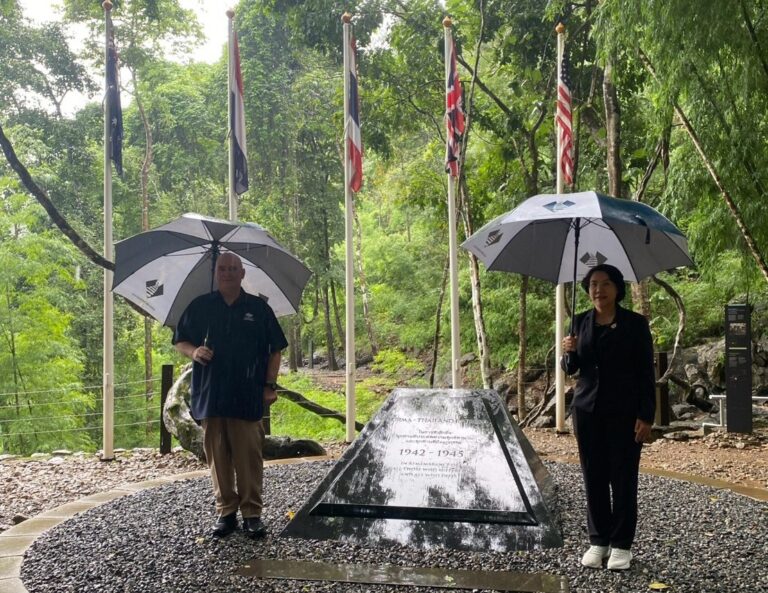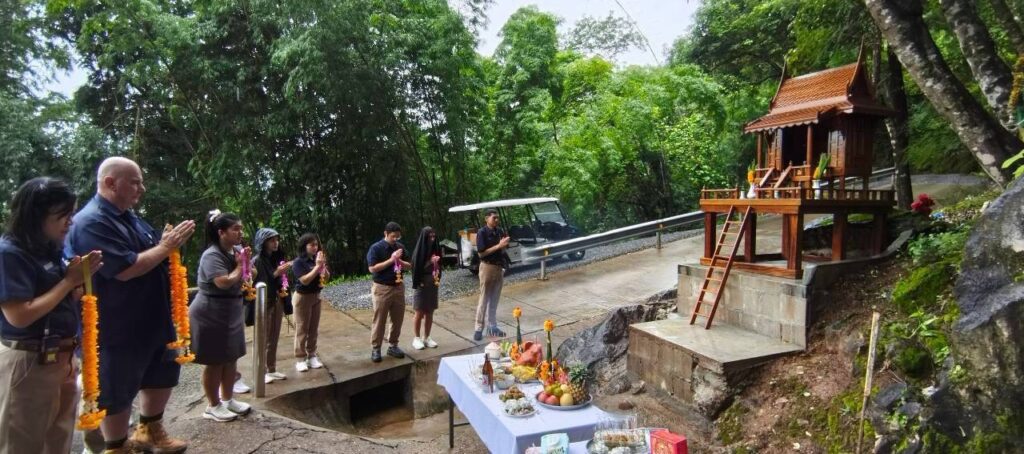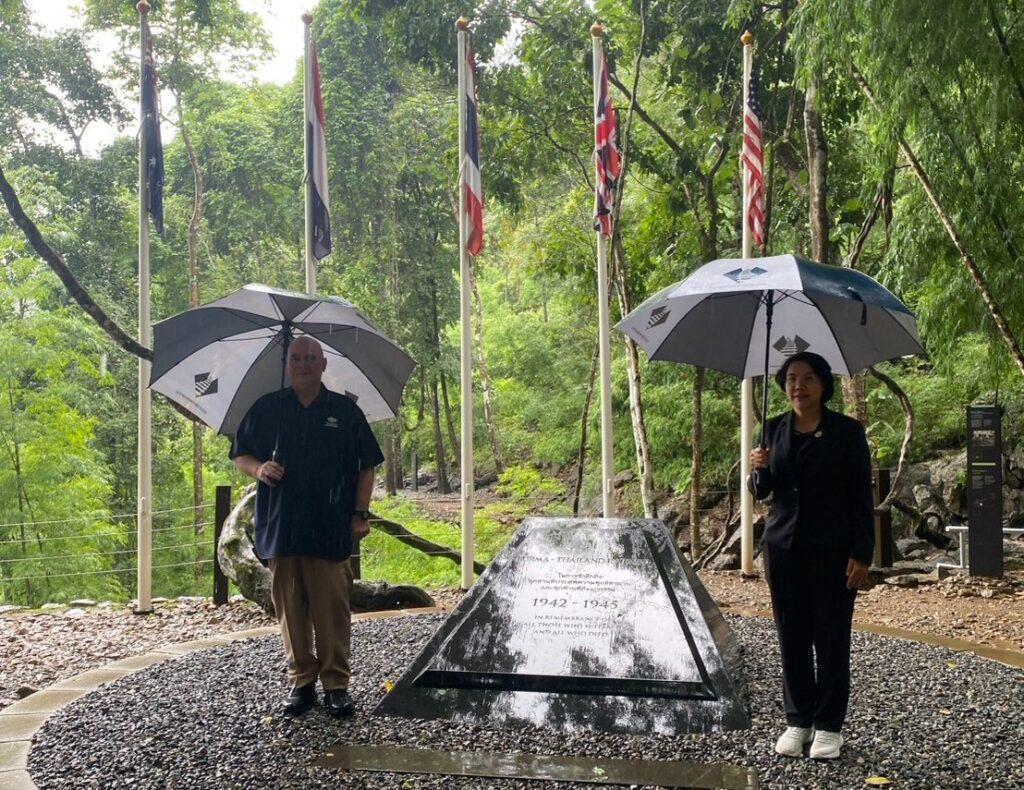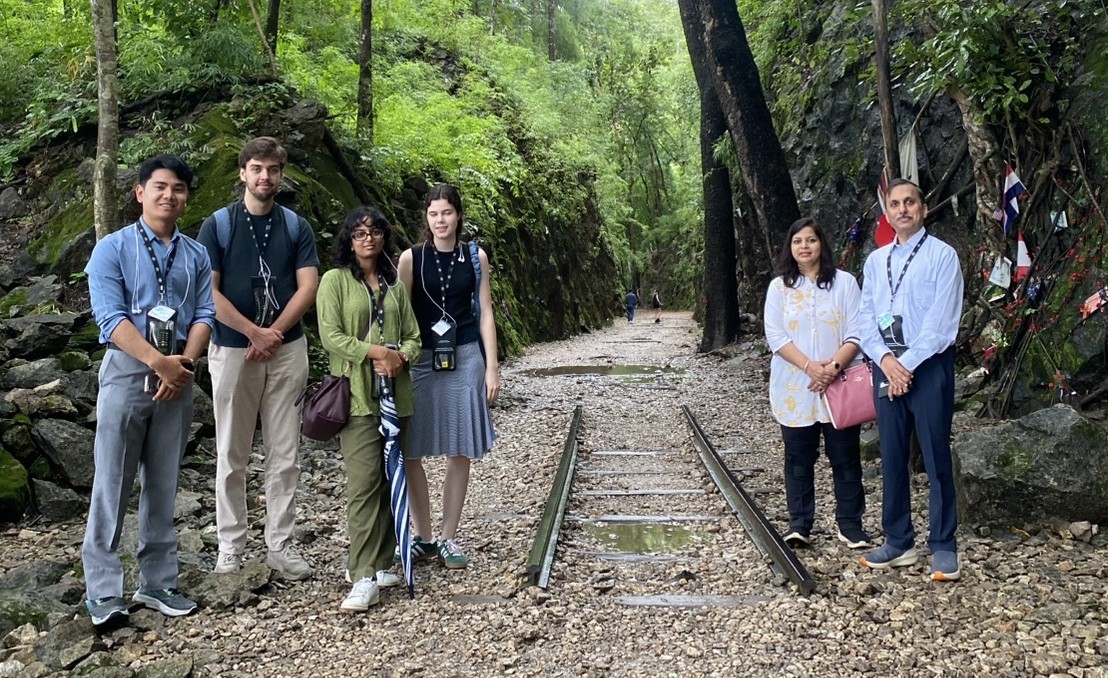
On 22 August 2026, H.E. Ambassador Puneet Agarwal, Ambassador of India to Thailand (first from right), visited the Hellfire Pass Interpretive Centre in Kanchanaburi, accompanied by his family and friends. The visit marked the Ambassador’s first visit to Kanchanaburi since taking up his posting in Thailand in May 2026.
During his visit, Ambassador Agarwal toured the Interpretive Centre, exploring the exhibitions that document the history of the Burma–Thailand Railway and the experiences of those who were involved in its construction during the Second World War. He then proceeded along the walking trail to Hellfire Pass, where he gained a deeper understanding of the immense challenges involved in constructing the railway through the rugged terrain, as well as the harsh working and living conditions endured by those who worked on the railway.
The construction of the Burma–Thailand Railway involved Allied prisoners of war alongside a much larger workforce of Asian labourers, commonly referred to as Romusha. Among these workers were civilians from India, who formed part of the diverse Asian workforce brought to the railway. While the exact number of Romusha who died remains uncertain due to incomplete wartime records, it is widely estimated that up to 90,000 Asian labourers lost their lives during the construction of the railway.
The Ambassador’s visit provided an opportunity to reflect on the experiences of all those who suffered and lost their lives during the construction of the railway, including Indian civilians whose stories form an important part of this shared history. The Hellfire Pass Interpretive Centre remains committed to preserving these memories and presenting the history of the Burma–Thailand Railway for future generations.