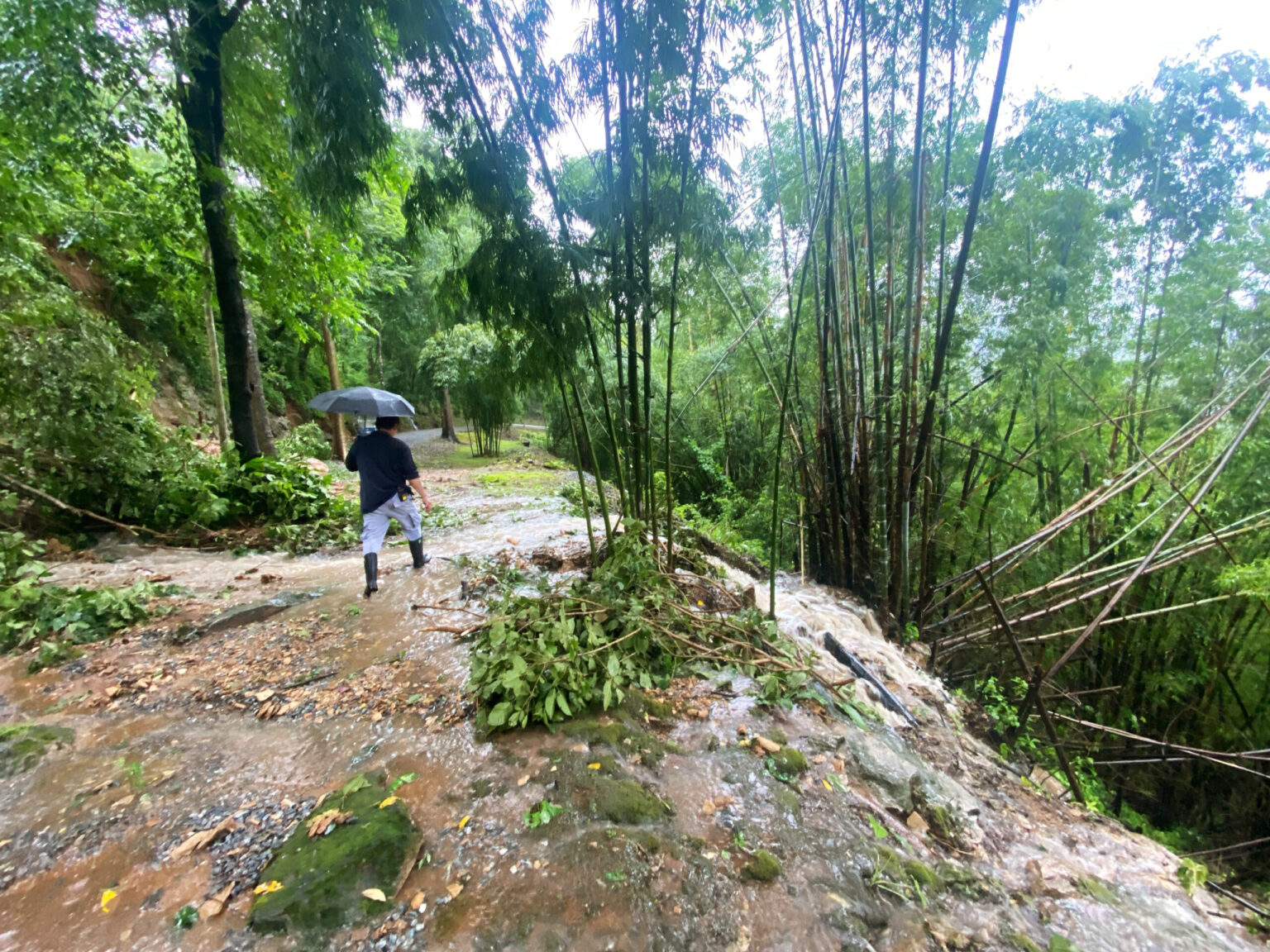
The final week of September 2026 brought an exceptional period of heavy monsoon rainfall to Thailand, causing widespread flooding in several parts of the country. Among the affected areas was Sai Yok District in Kanchanaburi Province, home to the Hellfire Pass Interpretive Centre, where intense rainfall and water runoff from the surrounding mountains resulted in severe flooding and temporary disruption to visitor services.
Between 26 and 28 September, more than 250 millimetres of rainfall were recorded in the area within just three days, far exceeding the typical daily rainfall of approximately 1–5 millimetres. The prolonged downpour caused water levels to rise rapidly, overwhelming local drainage systems and sending large volumes of water from the surrounding hills into nearby roads, waterways and residential areas.
The effects were felt throughout the district, with floodwaters blocking roads and damaging several residential areas along the River Kwai. A number of resorts and hotels were also forced to suspend operations temporarily. Elsewhere in Thailand, the same period of intense monsoon weather triggered flooding across multiple regions, including Bangkok, where inundated roads and disrupted public transport added to the difficulties faced by residents and commuters.
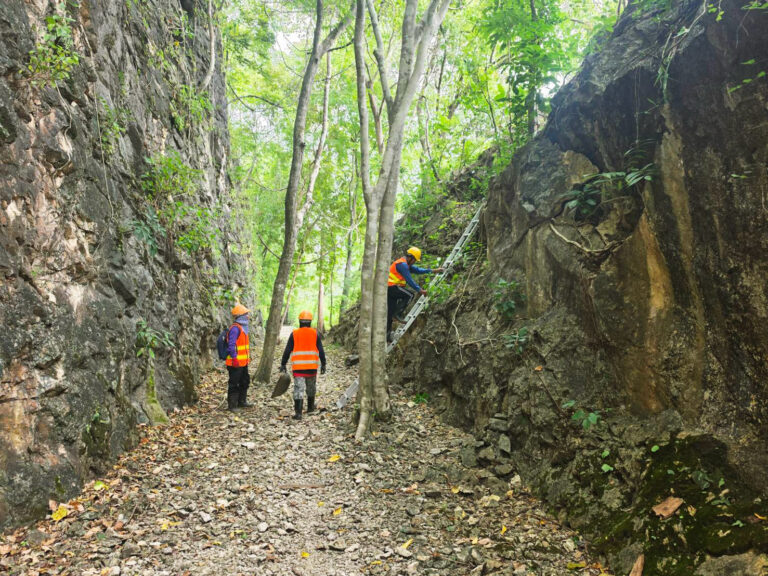
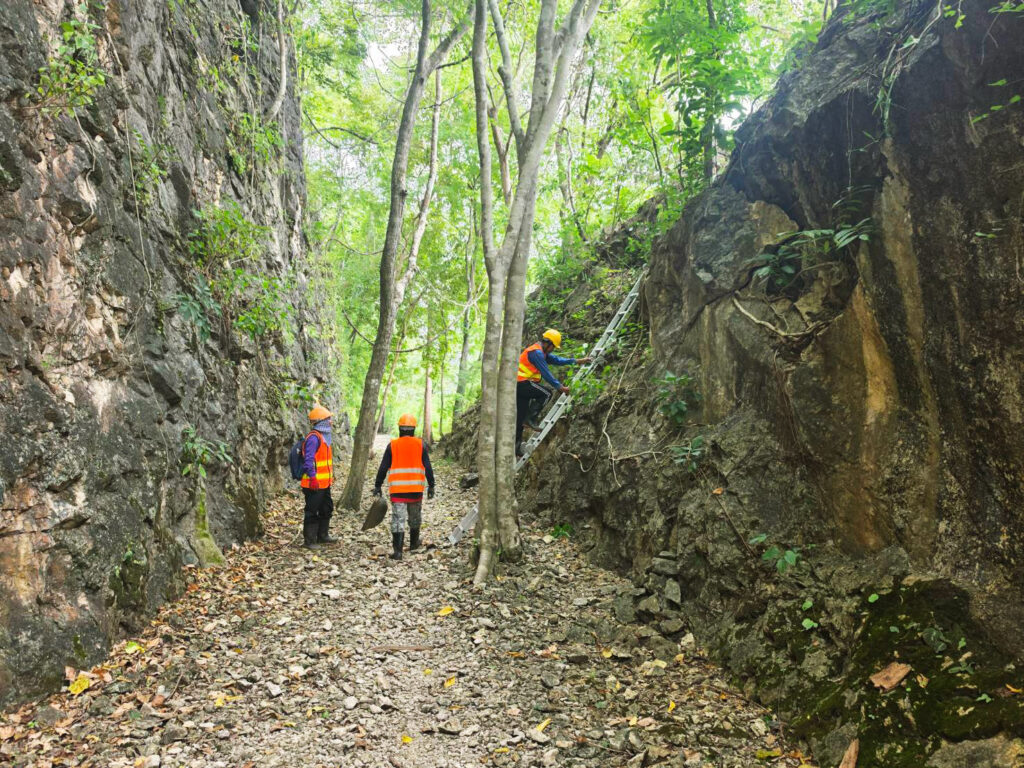
At Hellfire Pass, the severe weather affected both the immediate vicinity of the Centre building and the historic walking trail. In response to the flooding and the potential risks of landslides and falling rocks, all facilities and visitor services were temporarily closed to allow conditions to be assessed and safety measures to be undertaken.
The Centre building reopened on 6 October, while access to the walking trails remained restricted until the necessary safety inspections had been completed. Following these assessments, the Centre resumed full operations on 8 October 2026, welcoming visitors back to the exhibition building, the short 500-metre walk to Hellfire Pass and the longer 2.6-kilometre walking trail.
Although the flooding presented significant challenges for the Centre and surrounding communities, the temporary closure was an important precaution to ensure visitor safety. The experience also underscored the importance of continued monitoring and maintenance of the site, particularly during the monsoon season, when heavy rainfall can quickly change conditions across the surrounding mountainous landscape.